9 Influencer Marketing Trends: What You Need to Know in 2026
Influencer marketing has grown into a massive, data-driven industry — now valued at over $32.5 billion globally, up from just $1.7 billion a decade ago. As consumer behavior, platform algorithms, and AI reshape the space, here are the trends actually backed by 2026 data that your brand needs to know.
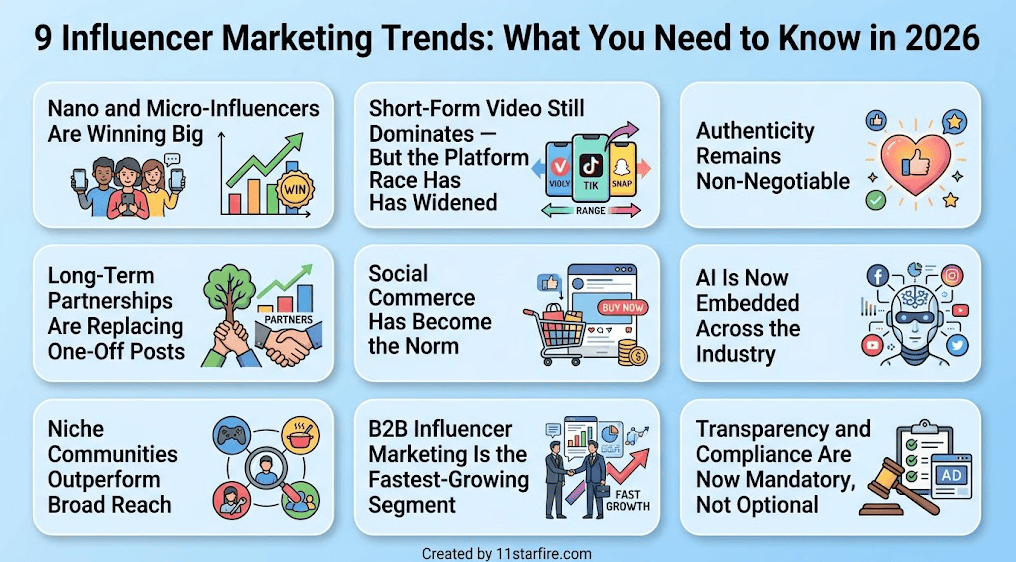
1. Nano and Micro-Influencers Are Winning Big
The days of chasing follower count are over. Nano-influencers (under 10,000 followers) now make up the majority of Instagram’s creator base, and data shows micro-influencers (10K–100K followers) generate engagement rates around 3.86%, compared to just 1.21% for mega-influencers with over 1 million followers — while costing roughly 60% less per post.
Smaller creators simply feel more like trusted peers than distant celebrities, which is exactly why brands are shifting budgets toward them.
2. Short-Form Video Still Dominates — But the Platform Race Has Widened
Short-form video (Reels, TikTok, YouTube Shorts) remains the top-performing content format for engagement and product discovery. TikTok currently leads with engagement rates between 4.25% and 5.53%, while Instagram Reels average around 3.74% — both far outperforming standard feed posts. Other platforms like Snapchat Spotlight and YouTube Shorts have also entered the space, meaning brands now need a multi-platform short-video strategy, not just a TikTok-only one.
3. Authenticity Remains Non-Negotiable
Raw, unfiltered, and honest content continues to outperform polished, ad-like posts. Audiences — especially those under 35 — are increasingly skeptical of celebrity endorsements: only 8% of younger consumers prefer celebrity content, while over half actively prefer recommendations from micro-influencers.
4. Long-Term Partnerships Are Replacing One-Off Posts
Brands are moving away from single sponsored posts in favor of ongoing creator relationships. This builds deeper brand integration, more consistent messaging, and stronger long-term audience trust — while also reducing the risk of relying on any single influencer.
5. Social Commerce Has Become the Norm
Influencer content is no longer just about awareness — it’s directly tied to sales. Platforms like TikTok Shop and Instagram have turned creator content into live storefronts, with in-app checkout and shoppable posts now standard. Influencer-driven content increasingly outperforms brand-owned content across reach, engagement, and conversion.
6. AI Is Now Embedded Across the Industry
AI tools are now widely used for creator discovery, campaign performance tracking, and content optimization — while fully AI-generated virtual influencers remain a smaller, more niche category rather than a mainstream replacement for human creators. The key insight for 2026: AI supports the data and logistics side of campaigns, but genuine human storytelling still drives real connection and trust.
7. Niche Communities Outperform Broad Reach
Private groups, niche forums, and micro-communities are proving more valuable than large, noisy platforms. Influencers embedded in specific niches (like sustainable living, tech, or wellness) consistently deliver higher engagement and better ROI, since their audiences are smaller but far more receptive.
8. B2B Influencer Marketing Is the Fastest-Growing Segment
While influencer marketing is often seen as a B2C strategy, B2B influencer marketing is now the fastest-growing subcategory in the entire industry — expanding around 47% year-over-year, with its own dedicated multi-billion-dollar market. LinkedIn, YouTube, and even TikTok are increasingly influencing business purchasing decisions, not just consumer ones.
9. Transparency and Compliance Are Now Mandatory, Not Optional
Clear disclosure of sponsored content is required under updated regulatory guidelines, and platforms are enforcing this more strictly than ever. With audiences becoming more AI-savvy and skeptical of fake endorsements, transparency isn’t just a legal requirement — it’s essential for maintaining trust.
Key Takeaways
- Shift budget toward nano and micro-influencers for stronger engagement and lower cost per result
- Build a short-form video strategy across multiple platforms, not just one
- Prioritize authentic, unpolished content over highly produced ads
- Invest in long-term creator relationships instead of one-off campaigns
- Treat influencer content as a direct sales channel through social commerce
- Use AI to support strategy and discovery — but keep storytelling human
- Explore niche communities and even B2B influencer opportunities if relevant to your industry
- Stay fully transparent and compliant with disclosure requirements
Influencer marketing in 2026 isn’t a passing trend — it’s a mature, data-backed channel with measurable ROI. Brands that adapt to these shifts — smaller creators, video-first content, social commerce, and AI-assisted strategy — will be the ones building real, lasting connections with their audiences.
ref:
- For more on current industry shifts, check out the Influencer Marketing Hub’s comprehensive influencer marketing trends report.
- For a data-driven perspective, read Hootsuite’s breakdown of key influencer marketing statistics and trends.